Sofas and chairs are made from many different fabrics, dyes and fillings. Before buying a cleaning tool, identify the care code and fabric type. A method that works on a synthetic cushion cover may damage velvet, linen, leather or a water-sensitive fabric.
BEFORE YOU DIVE IN
Would you like a quick starting point or the full guide?
Product research note: Product buttons open ordinary Amazon searches, without affiliate tracking. These are categories to compare, not claims of personal testing. Check current specifications and safety instructions.
Read the care label first
Check the manufacturer's label or care guide before applying moisture or chemicals. Some fabrics tolerate water-based cleaning, others require solvent-based methods, and some should only be handled by a specialist. If the code is missing or unclear, do not guess.
Start with low-risk tools
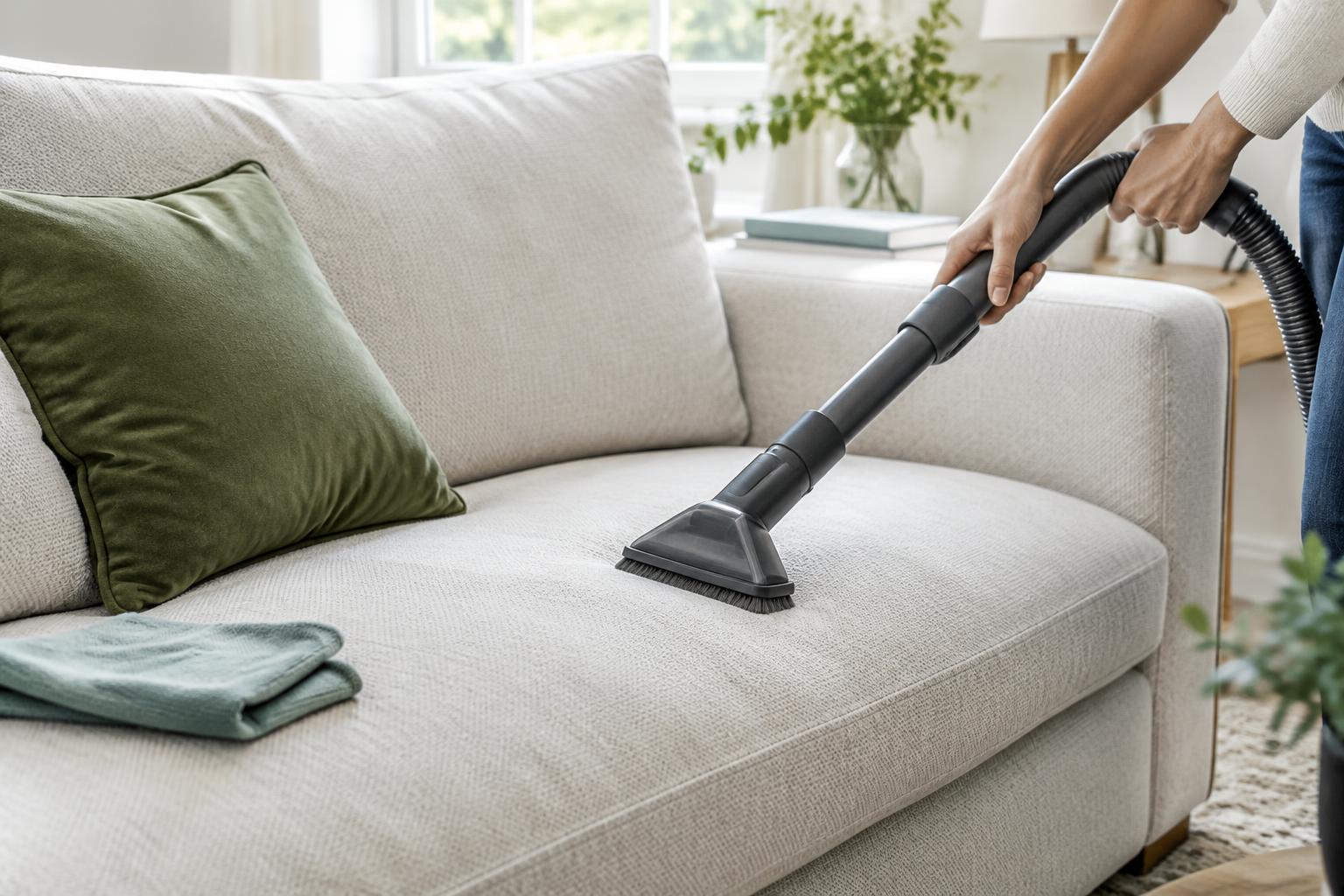
A vacuum with a suitable upholstery attachment, clean white microfibre cloths and a soft brush are useful for routine care. Avoid coloured cloths that may transfer dye, stiff brushes that roughen pile and aggressive scrubbing that can spread a stain or damage fibres.
Spot cleaners and extraction tools
Portable extraction machines can help on compatible fabrics, but they introduce moisture. Check the furniture maker's guidance, test a hidden area and avoid soaking seams, cushions or the frame. Allow thorough drying with ventilation.
- Soft upholstery brush for approved fabrics.
- White absorbent cloths for blotting.
- A vacuum attachment designed for upholstery.
- A fabric-compatible cleaner used exactly as labelled.
Treat stains carefully
Blot fresh spills rather than rubbing. Work from the outside toward the centre when appropriate to reduce spreading, and follow fabric-specific instructions. Do not combine stain removers or use a household chemical simply because it works on a different surface.
When to call a specialist
Consider a professional for expensive or antique furniture, colour transfer, large stains, delicate fabrics, persistent odours or uncertain care codes. Explain what has already been applied so the cleaner can choose an appropriate method.
Equipment to compare
Upholstery vacuum attachments
Choose a soft attachment designed for furniture and compatible with your vacuum.
Read the category assessmentWhite microfibre cloths
Plain white cloths make colour transfer easier to spot and are useful for blotting.
Read the category assessmentPortable upholstery spot cleaners
Check moisture control, tool size and compatibility with your fabric.
Read the category assessmentFabric-safe upholstery cleaner
Match the product to the fabric care code and follow the label.
Read the category assessmentIdentify the fabric before buying a product or machine. For everyday maintenance, vacuuming and gentle blotting are often the safest first steps; use wet extraction only when the fabric allows it.
Prices, product availability and specifications change. Follow the manufacturer’s instructions and use suitably equipped professionals for safety-sensitive work. Images are illustrative, not before-and-after evidence or a promised result.
YOUR NEXT SMALL STEP
Read it. Then make it easier.
Share the job you have in mind. No account needed and no booking or payment made by requesting a quote.
Find my indicative estimate